
Saint James Major
c. 1310
Medium
tempera on panel
Dimensions
painted surface (top of gilding): 62.2 × 34.8 cm (24 1/2 × 13 11/16 in.) painted surface (including painted border): 64.8 × 34.8 cm (25 1/2 × 13 11/16 in.) overall: 66.7 × 36.7 × 1.2 cm (26 1/4 × 14 7/16 × 1/2 in.)
Classification
Painting
Department
CIS-R
Museum
National Gallery of Art, Washington, D.C.
Credit
Andrew W. Mellon Collection
Accession Number
1937.1.2.c
Rights
Public Domain
Art Historical Context
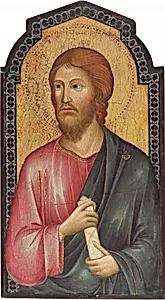
Behold *Saint James Major*, a striking tempera panel painting by the little-known Umbrian artist Grifo di Tancredi, created around 1310. This devotional image captures the apostle—often revered as the patron saint of pilgrims—in the elegant, elongated style typical of early Italian Gothic art. At just over 66 cm tall, its narrow format suggests it may have formed part of a larger altarpiece or private chapel ensemble, inviting worshippers into a sacred encounter. Crafted in tempera on panel with intricate gilding (evident in the 62.2 × 34.8 cm painted surface), the work exemplifies medieval techniques: pigments bound with egg yolk yielded luminous colors and fine details, while gold leaf evoked divine radiance. This method, rooted in Byzantine traditions, dominated Italian panel painting in the trecento, bridging the Middle Ages and the dawn of Renaissance naturalism. Housed in the National Gallery of Art's Andrew W. Mellon Collection, *Saint James Major* offers a window into 14th-century religious life, where such images fostered piety amid turbulent times like the Black Death's prelude. Grifo's modest output highlights the vibrant workshop culture of central Italy, preserving faith through art's enduring glow.