
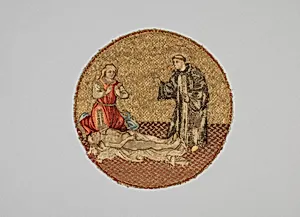
Saint Martin Brings a Dead Man to Life
Unknown Artist
1430–35
Medium
Linen plain weave underlaid with linen plain weave and embroidered with silk and gilt-metal-strip-wrapped silk in split and stem stitches, laid work, and couching, including or nué
Dimensions
Diameter: 6 11/16 in. (17cm)
Classification
Textiles-Ecclesiastical
Culture
Flemish
Department
Robert Lehman Collection
Museum
Metropolitan Museum of Art, New York, NY
Credit
Robert Lehman Collection, 1975
Accession Number
1975.1.1906
Rights
Public Domain
Tags
Art Historical Context
Nestled in the Robert Lehman Collection at The Metropolitan Museum of Art, exquisite 6 11/16-inch (17 cm) circular embroidery, *Saint Martin Brings a Dead Man to Life*, hails from Flemish workshops around 1430–35. Crafted for ecclesiastical use, it captures a miraculous moment from the life of Saint Martin of Tours the 4th-century bishop famed for his acts of charity and divine intervention. Here, the unknown artist depicts the saint resurrecting a deceased man, a vivid testament to medieval faith in saints as intercessors between heaven and earth. The artwork's technical brilliance shines in its layered linen plain-weave foundation, adorned with shimmering silk and gilt-metal-strip-wrapped silk threads. Masterful techniques—split and stem stitches for fine detail, laid work and couching for bold patterns, and the opulent *or nué* (a gold-ground embroidery evoking heavenly radiance)—reflect the height of Flemish textile artistry during the early Northern Renaissance. These methods, labor-intensive and luxurious, were reserved for church vestments or altar furnishings, symbolizing divine splendor amid the era's growing devotion to relic cults and miracle narratives. This small yet powerful roundel invites visitors to marvel at how 15th-century Flemish craftsmen wove spirituality into fabric, bridging the mortal and miraculous in an age of religious fervor.