
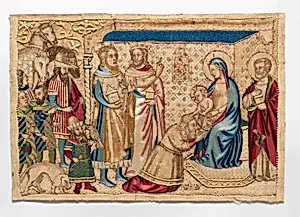
The Adoration of the Magi
Unknown Artist
late 14th century
Medium
Linen and cotton plain weave underlaid with linen plain weave and embroidered with silk and gilt-metal-strip-wrapped silk in bullion, split, and stem stitches, laid work, couching, and couching padded with cotton (couched with linen). Underdrawing and wash in sepia ink. Edging: hemp plain weave
Dimensions
11 7/8 x 17 5/16 in. (30.1 x 44cm) edging width: 5/16 - 5/8 in. (0.8 - 1.6 cm)
Classification
Textiles-Ecclesiastical
Culture
Italian
Department
Robert Lehman Collection
Museum
Metropolitan Museum of Art, New York, NY
Credit
Robert Lehman Collection, 1975
Accession Number
1975.1.1781
Rights
Public Domain
Tags
Art Historical Context
In the late 14th century, Italy's vibrant Gothic era, ecclesiastical textiles like *The Adoration of the* served as luxurious adornments for altars, vestments, or processional hangings in churches. This small panel (11⅞ × 17¼ inches) captures the biblical Nativity scene, with the Magi presenting gifts to the Christ Child, flanked by the Virgin Mary, Joseph, horses, dogs, and birds—evoking the humble stable's lively wonder. Crafted anonymously by skilled Italian embroiderers, it reflects the era's devotion to religious iconography, blending spiritual narrative with opulent craftsmanship to inspire awe in worshippers. The artwork's medium showcases masterful techniques: a linen and cotton base underdrawn in sepia ink and wash, then embroidered with shimmering silk and gilt-metal-strip-wrapped silk using bullion, split, stem stitches, laid work, and padded couching for raised, jewel-like effects. Hemp edging frames the scene, highlighting the labor-intensive process akin to painting with thread. Such textiles were prized status symbols, their gold threads mimicking illuminated manuscripts and signaling piety amid the Black Death's shadow. From the Robert Lehman Collection at The Metropolitan Museum of Art, this piece offers a tactile glimpse into medieval devotion, where every stitch wove faith into fabric.