
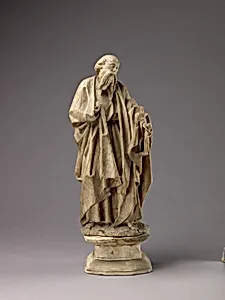
Saint Paul
ca. 1450–70
Medium
Alabaster
Dimensions
H. 34.1 cm (excluding base), h. 6.4 cm (base).
Classification
Sculpture-Alabaster
Culture
Southern Netherlandish or Northern France
Department
Robert Lehman Collection
Museum
Metropolitan Museum of Art, New York, NY
Credit
Robert Lehman Collection, 1975
Accession Number
1975.1.1486
Rights
Public Domain
Tags
About this artwork
[Research in progress for Saint Paul by Southern Netherlands|Northern France, ca. 1450–70]
Art Historical Context
This exquisite alabaster sculpture of *Saint Paul*, crafted around 1450–70 in the Southern Netherlands or Northern France, stands as a testament to the refined religious art of late medieval Europe. Measuring just 34.1 cm in height (excluding its 6.4 cm base), the figure captures the apostle in contemplative pose, likely holding his traditional attributes—a sword symbolizing his martyrdom and a book representing his epistles. Produced during a period of transition from Gothic to early Renaissance styles, such works were often made by anonymous workshops for private devotion, adorning altars or personal chapels amid the devotional fervor of the 15th century. Alabaster's soft, translucent quality made it ideal for intricate carving, allowing sculptors to achieve delicate drapery folds and expressive faces with fine chisels and abrasives. Sourced from quarries in northern France, this medium was prized for its luminous glow when polished, evoking a sense of divine light. The sculpture's modest scale suggests it was designed for intimate settings, reflecting the growing emphasis on personal piety in Burgundian and Valois courts. Housed in the Metropolitan Museum of Art's Robert Lehman Collection since 1975, this piece offers a glimpse into the cultural crossroads of Netherlandish and French artistry, where technical mastery met spiritual depth. Visitors are invited to admire its serene elegance up close.