
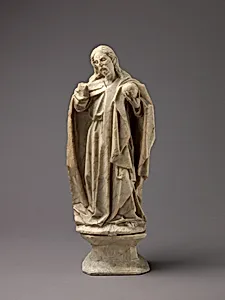
Statue: Christ
ca. 1450–70
Medium
Alabaster
Dimensions
H. 34.1 cm (excluding base), h. 6.4 cm (base).
Classification
Sculpture-Alabaster
Culture
Southern Netherlands or Northern France
Department
Robert Lehman Collection
Museum
Metropolitan Museum of Art, New York, NY
Credit
Robert Lehman Collection, 1975
Accession Number
1975.1.1484
Rights
Public Domain
Tags
Art Historical Context
This alabaster statue of Christ, created around 1450–70 in the Southern Netherlands or Northern France, exemplifies the refined devotional sculpture popular in late medieval Northern Europe. Standing just over a foot tall without its base, the work was likely intended for private prayer or a small chapel setting. Alabaster’s soft, translucent quality allowed sculptors to achieve delicate details and a luminous surface that enhanced the figure’s spiritual presence. During this period, alabaster carvings from the region often served as intimate objects of faith, reflecting the growing emphasis on personal piety in the decades before the Reformation. The medium’s popularity stemmed from its workability and ability to mimic more costly materials like marble or ivory, making such pieces accessible to wealthy merchants and nobility alike. Now part of the Metropolitan Museum’s Robert Lehman Collection, the sculpture offers visitors a glimpse into the artistic traditions of the Burgundian Netherlands, where regional workshops blended Gothic elegance with emerging Renaissance influences. Its modest scale and luminous stone continue to invite quiet contemplation today.