
Saint Sebastian
1551 to 1600
Medium
etching
Classification
Department
CG-E
Museum
National Gallery of Art, Washington, D.C.
Credit
Ailsa Mellon Bruce Fund
Accession Number
1972.28.91
Rights
Public Domain
Art Historical Context
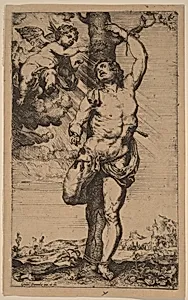
In the tranquil galleries of the National Gallery of Art, Willem Panneels' *Saint Sebastian* (ca. 1551–1600) captivates with its delicate etching technique. This Flemish print depicts the beloved Christian martyr, traditionally shown bound to a tree and pierced by arrows, symbolizing faith amid suffering. Panneels, a 16th-century Antwerp-based engraver, masterfully captures the saint's serene endurance, blending Renaissance humanism with devotional intensity. Etching, the medium here, marked a revolutionary shift in printmaking during the late Renaissance. Unlike rigid engraving, it used acid to etch fluid lines into a metal plate, allowing artists like Panneels greater expressiveness and tonal subtlety. This innovation democratized art, enabling affordable reproductions of religious icons amid the Counter-Reformation's push for visual piety in Northern Europe. Acquired through the Ailsa Mellon Bruce Fund and housed in the museum's Print department (CG-E), this work exemplifies the era's fusion of technical prowess and spiritual fervor. Visitors will appreciate its intricate details, inviting quiet reflection on endurance and grace.