
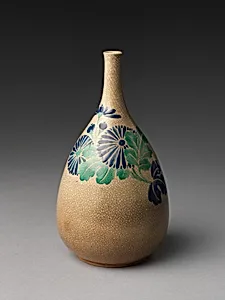
Sake bottle with chrysanthemums
Unknown Artist
18th century
Medium
Stoneware (Mizoro ware)
Dimensions
H. 8 3/4 in. (22.2 cm)
Classification
Ceramics
Culture & Period
Japan · Edo period (1615–1868)
Department
Asian Art
Museum
Metropolitan Museum of Art, New York, NY
Credit
Gift of Florence and Herbert Irving, 2015
Accession Number
2015.500.9.37
Rights
Public Domain
Art Historical Context
This elegant sake bottle, adorned with chrysanthemums,ails from Japan's Edo period (1615–1868), a time of relative peace and prosperity that fostered vibrant ceramic traditions. Crafted in the 18th century by an unknown artist, it exemplifies Mizoro ware stoneware—a durable, everyday medium prized for its earthy tones and subtle glazes. Standing at 8 3/4 inches tall, the bottle's practical form was designed for serving sake, Japan's cherished rice wine, blending utility with artistry in domestic life. Chrysanthemums, meticulously rendered on the surface, hold deep cultural resonance as symbols of longevity, rejuvenation, and imperial prestige in Japan. During the Edo era, such motifs graced ceramics used in tea ceremonies, festivals, and home rituals, reflecting the era's appreciation for nature's fleeting beauty. Mizoro ware's stoneware body, fired to withstand daily use, highlights the technical prowess of regional kilns, where potters balanced functionality with decorative flair. Today, this gift to the Metropolitan Museum of Art from Florence and Herbert Irving invites us to savor Edo Japan's harmonious fusion of craft and culture—a humble vessel whispering tales of seasonal revelry and enduring elegance.