
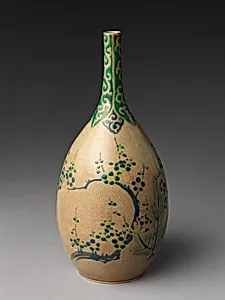
Sake bottle with pine, bamboo and plum
Unknown Artist
mid-17th century
Medium
Stoneware (Mizoro ware)
Dimensions
H. 11 7/16 in. (29 cm)
Classification
Ceramics
Culture & Period
Japan · Edo period (1615–1868)
Department
Asian Art
Museum
Metropolitan Museum of Art, New York, NY
Credit
Gift of Florence and Herbert Irving, 2015
Accession Number
2015.500.9.35
Rights
Public Domain
Tags
Art Historical Context
Nestled in the Metropolitan Museum of Art's Asian collection, this elegant sake bottle from mid-17th-century Japan exemplifies the refined ceramics of the Edo period (1615–1868). Crafted in stoneware known as Mizoro ware, stands at 11 7/16 inches tall its sturdy form ideal for storing and serving sake during social gatherings. The bottle's surface features incised or painted motifs of pine, bamboo, and plum—the celebrated "Three Friends of Winter" in East Asian tradition—evoking resilience and harmony amid adversity. Mizoro ware, produced at regional kilns, highlights the Edo era's ceramic innovation, blending functionality with aesthetic appeal. Stoneware's durability made it practical for everyday use, yet the natural motifs reflect the period's growing appreciation for subtle, nature-inspired beauty among merchants and samurai alike. This gift from Florence and Herbert Irving in 2015 preserves a snapshot of Japan's vibrant pottery tradition. Symbolizing longevity (pine), flexibility (bamboo), and hope (plum blossoms heralding spring), these designs carried auspicious meanings, perfect for festive sake rituals. Visitors, imagine toasting with this vessel, bridging centuries of Japanese culture!