
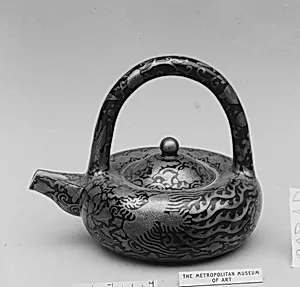
永樂保全作 金襴手鳳凰吉祥文銚子|Sake Ewer (Chōshi) with Phoenixes and Auspicious Patterns
first half of the19th century
Medium
Porcelain painted with red and gold (kinrande) over a transparent glaze (Kyoto ware, Eiraku type)
Dimensions
H. 5 1/4 in. (13.3 cm); W. at spout 6 3/8 in. (16.2 cm); Diam. 5 in. (12.7 cm); Diam. of base 3 in. (7.6 cm)
Classification
Ceramics
Culture & Period
Japan · Edo period (1615–1868)
Department
Asian Art
Museum
Metropolitan Museum of Art, New York, NY
Credit
Gift of Charles Stewart Smith, 1893
Accession Number
93.3.203a, b
Rights
Public Domain
Art Historical Context
This exquisite Sake Ewer (Chōshi) with Phoenixes and Auspicious Patterns was created by Eiraku Hozen in the first half of the 19th century during Japan’s Edo period. As a master of Kyoto ware in the Eiraku tradition, Hozen specialized in refined porcelain that blended functionality with opulent decoration. The vessel’s elegant form, designed for pouring sake during ceremonies and gatherings, reflects the period’s appreciation for objects that elevated daily rituals into moments of beauty. The ewer’s striking red-and-gold kinrande decoration—porcelain painted over a transparent glaze—highlights Hozen’s mastery of this demanding technique. Bold phoenixes, symbols of renewal and good fortune, soar amid auspicious patterns, evoking wishes for prosperity and harmony. Originally inspired by Chinese Ming-dynasty methods, kinrande reached new heights in Kyoto workshops, where artisans adapted it to suit Japanese tastes for subtle elegance and symbolic depth. Now part of the Metropolitan Museum of Art’s Asian Art collection, this piece offers visitors a window into Edo-period Japan’s rich ceramic heritage and the cultural importance of sake in social and ritual life. Its graceful proportions and luminous surface continue to captivate, bridging centuries of artistic exchange between East Asia and the wider world.
About the Artist
Eiraku Hozen · 1795–1854
Eiraku Hozen (1795–1854) was a celebrated Japanese ceramic artist and the sixteenth-generation head of the Nishimura family, a Kyoto dynasty of potters whose work was closely associated with the tastes of the imperial court and the refined aesthetic culture of the ancient capital. Operating under the artistic name Eiraku — a name that would become synonymous with a particular style of elegant, tec...