
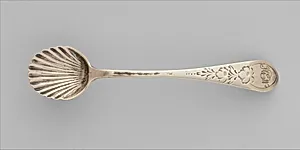
Salt Spoon
1790–1810
Medium
Silver
Dimensions
L. 4 3/8 in. (11.1 cm)
Classification
Spoon
Culture
American
Department
The American Wing
Museum
Metropolitan Museum of Art, New York, NY
Credit
Bequest of Alphonso T. Clearwater, 1933
Accession Number
33.120.406
Rights
Public Domain
Art Historical Context
Nestled in the American Wing of the Metropolitan Museum Art, this delicate salt spoon, crafted by Paul Revere. between 1790 and 1810, exemplifies the finest in early American silversmithing. Measuring just 4 3/8 inches long, this silver utensil was designed for serving salt at the dining table—a small but essential luxury item in prosperous households of the young republic. Revere, renowned not only for his midnight ride during the Revolution but also for his masterful metalwork, produced pieces like this that blended functionality with elegance. Silver was a prized medium in post-Revolutionary America, symbolizing wealth, refinement, and national pride as artisans sought to rival European imports. Revere's spoons showcase his expertise in hand-wrought techniques, likely involving hammering sheet silver into shape and precise finishing for a smooth, lustrous surface. These objects highlight the rise of American craftsmanship during a time of economic growth and cultural independence. Bequeathed to the Met in 1933 by Alphonso T. Clearwater, this salt spoon offers a tangible glimpse into everyday elegance of the Federal period, reminding us how even humble tools carried the weight of artistry and history.
About the Artist
Paul Revere Jr. · 1734–1818
Paul Revere Jr. (1734–1818), born in Boston's North End, was the son of French Huguenot silversmith Apollos Rivoire—also known as Paul Revere Sr.—and Deborah Hichborn, a member of a local artisan family. At age 13, he left school to apprentice under his father, mastering the intricate craft of silversmithing and engraving in the family shop, which he inherited upon his father's death in 1754. Reve...