Ctrl K

1734–1818
Paul Revere Jr. (1734–1818), born in Boston's North End, was the son of French Huguenot silversmith Apollos Rivoire—also known as Paul Revere Sr.—and Deborah Hichborn, a member of a local artisan family. At age 13, he left school to apprentice under his father, mastering the intricate craft of silversmithing and engraving in the family shop, which he inherited upon his father's death in 1754. Revere married Sarah Orne in 1757, fathering eight children before her death in 1773, and then Rachel Walker, with whom he had eight more, building a large family amid his burgeoning career.
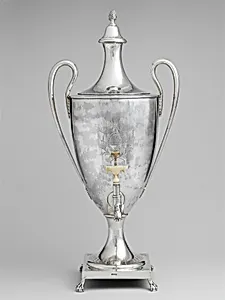
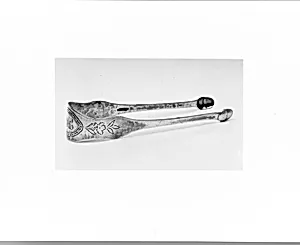
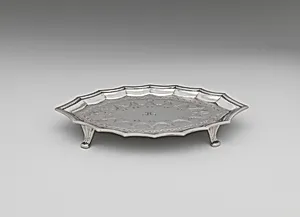
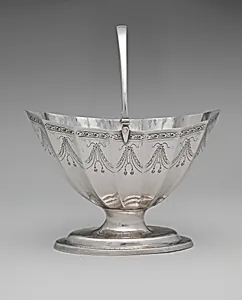
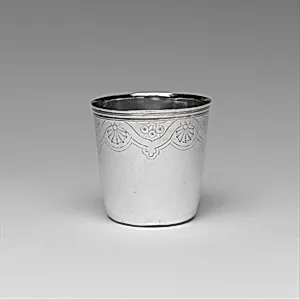
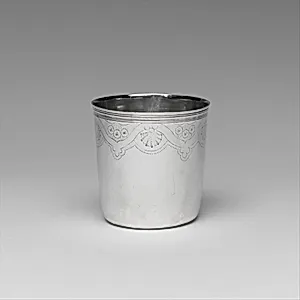
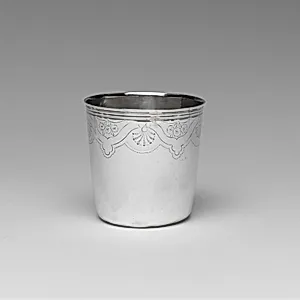
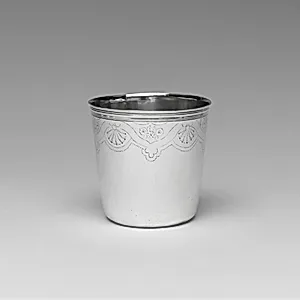
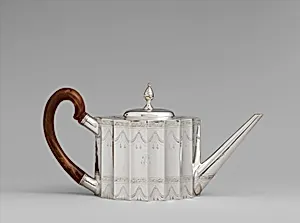
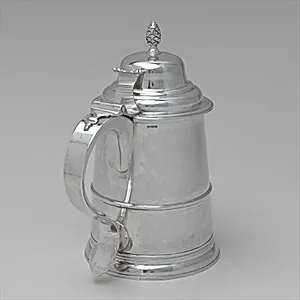
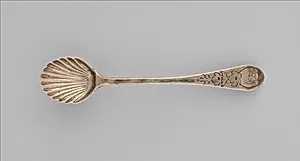
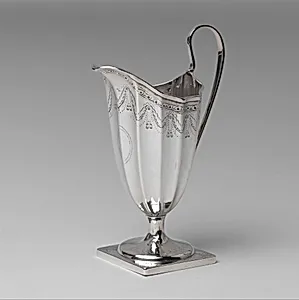
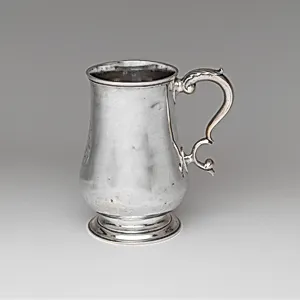
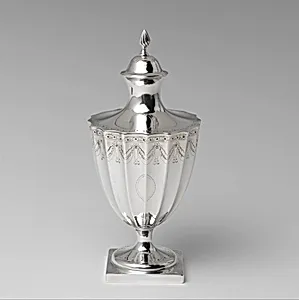
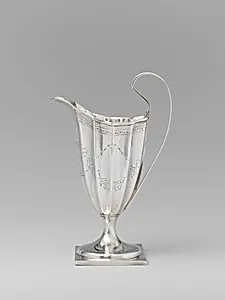
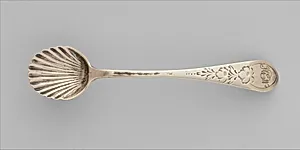
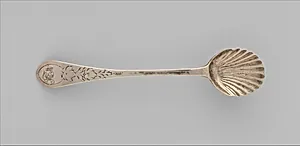
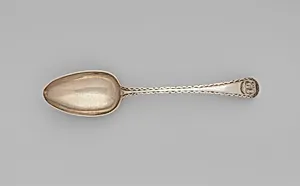
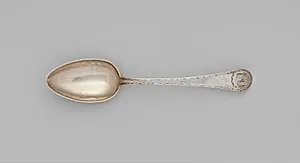
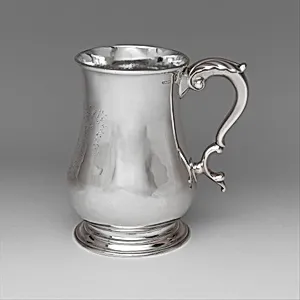
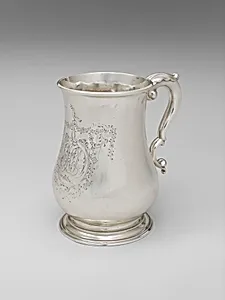
Revere's silversmithing evolved from the curvilinear Rococo style of his early career—seen in pieces like the Sauceboat (ca. 1765) and Sons of Liberty Bowl (1768)—to the more standardized Neoclassical designs postwar, such as the Tea Urn (1791), Teapot (ca. 1782 and 1796), Tumbler (1797), and Sugar Bowl (ca. 1795). As an engraver, he produced politically charged copperplates, including the iconic "The Bloody Massacre Perpetrated in King Street Boston on March 5, 1770" (1770), a Patriot propaganda print modeled on Henry Pelham's drawing, alongside Masonic certificates (1796), book illustrations, and currency. He crafted thousands of objects, from teaspoons and tankards to church bells and cannons, often employing innovative techniques like rolling mills acquired in 1785.
Revere's artistry intertwined with the American Revolution, fueling Patriot sentiment through engravings of British troops and commemorative silver, while his postwar ventures into hardware, foundries, and copper rolling sustained his legacy—supplying sheeting for the USS Constitution (1803) and Massachusetts State House dome (1802). Handing operations to his son Paul Jr., Revere's workshop produced over 56 surviving silver masterpieces now in major collections, cementing his status as one of colonial America's premier artisans whose functional elegance bridged European traditions and emerging national identity.