
Sampler
Unknown Artist
1813
Medium
Linen
Dimensions
L. 41 1/4 x W. 11 1/2 inches (104.8 x 29.2 cm)
Classification
Textiles-Embroidered
Culture
German
Department
European Sculpture and Decorative Arts
Museum
Metropolitan Museum of Art, New York, NY
Credit
From the Collection of Mrs. Lathrop Colgate Harper, Bequest of Mabel Herbert Harper, 1957
Accession Number
57.122.101
Rights
Public Domain
Art Historical Context
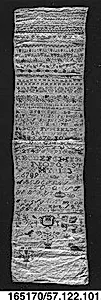
This exquisite linen sampler, crafted by an unknown German artist in 1813, the enduring tradition of embroidered textiles in early 19th-century Europe. Measuring an impressive 41¼ by 11½ inches, it belongs to the Metropolitan Museum of Art's Sculpture and Decorative Arts, gifted through the bequest of Mabel Herbert in 1957. Samplers like this were more than decorative; they served as personal records of accomplishment, often created by young girls to demonstrate proficiency in needlework skills essential for domestic life. In the context of Napoleonic-era Germany, such works reflected cultural values emphasizing education, piety, and household arts for women. Embroidered with fine stitches on sturdy linen—a practical yet elegant medium—the piece likely features alphabets, motifs, or moral verses, showcasing techniques like cross-stitch or satin stitch that required patience and precision. These artifacts highlight how embroidery bridged utility and artistry, preserving family histories and regional patterns. Today, this sampler offers a window into everyday creativity amid historical upheaval, reminding us of the quiet artistry of anonymous makers whose stitches wove stories of skill and tradition into the fabric of European heritage.