
Sampler
1676
Medium
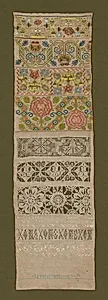
Linen, plain weave; bands of cut and drawn thread work in interlocking lace and Romanian stitches; bands of linen, needle lace of a type known as "Reticello"; and embroidered with silk in Algerian eye, hem, Montenegrin cross, running, double running, and satin stitches; buttonhole couching
Dimensions
73.3 × 21.2 cm (28 7/8 × 8 3/8 in.); Matted: 71.1 × 91.4 cm (28 × 36 in.)
Classification
textile
Department
Textiles
Museum
Art Institute of Chicago
Accession Number
27294
Rights
Public Domain
Art Historical Context
Created in 1676 by Katherine Veren, this sampler stands as a remarkable example of 17th-century needlework education and artistry. During this period, young women often stitched such panels to master and record a wide array of embroidery techniques essential for household linens and decorative arts. Veren’s work showcases her command of both functional and ornamental skills, transforming a learning exercise into a lasting textile treasure now preserved at the Art Institute of Chicago. The piece’s rich surface combines linen plain weave with intricate cut and drawn thread work, Reticello needle lace, and an impressive range of stitches including Algerian eye, Montenegrin cross, and satin. These methods reflect the cross-cultural exchange of textile traditions, blending English embroidery practices with Italian lace-making influences popular in Europe at the time. Measuring just over two feet long, the sampler’s compact format allowed Veren to display diverse patterns and textures in a single, portable composition. Today, this textile offers visitors a vivid glimpse into the patience, precision, and creativity expected of skilled needleworkers in the late 1600s. Its survival highlights the enduring value placed on handmade textiles as both practical tools and expressions of personal accomplishment.