
Sand Burr
ca. 1894
Medium
Painting
Classification
Painting
Department
Smithsonian Collection
Museum
Smithsonian American Art Museum
Credit
Smithsonian American Art Museum, Gift of the Ann and Tom Barwick Family Collection
Accession Number
2007.46
Rights
Public Domain
Tags
Art Historical Context
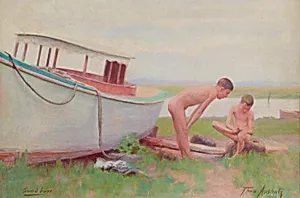
Thomas Anshutz's *Sand Burr* (ca. 1894) captures a vivid moment on the American coast, featuring a nude figure amid a beach scene with a boat, swimming elements, and a subtle nod to the prickly peril of sand burrs— spiny seaside plants that could easily cause a wound. As an oil painting from the Smithsonian American Art Museum's collection gifted by the Ann and Tom Barwick Family, it exemplifies late 19th-century American. Anshutz, a of Thomas Eakins at the Pennsylvania Academy of the Fine Arts, brought a bold, naturalistic approach to the human form, often depicting everyday leisure with unidealized honesty. Painted during a time when American artists were embracing outdoor scenes influenced by European Impressionism yet rooted in precise anatomical study, *Sand Burr* reflects the era's fascination with the body's vitality against nature's raw beauty. Anshutz's technique likely employed loose brushwork to convey light on water and sand, heightening the sensory drama of coastal life. This work stands out for its intimate portrayal of vulnerability—a wound amid idyllic swimming—highlighting the joys and hazards of seaside escapes popular among the Gilded Age elite. Visitors will appreciate how *Sand Burr* bridges academic rigor with modern informality, inviting reflection on humanity's playful yet precarious harmony with the environment. (198 words)