
Sard ring stone
Unknown Artist
ca. 2nd century CE
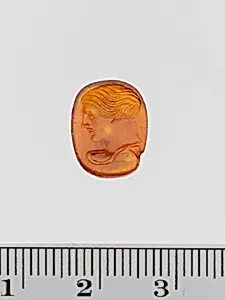
Medium
Sard
Dimensions
L. 1.7 cm
Classification
Gems
Culture & Period
Roman · Imperial
Department
Greek and Roman Art
Museum
Metropolitan Museum of Art, New York, NY
Credit
Gift of Rupert L. Joseph, 1955
Accession Number
55.6
Rights
Public Domain
Tags
Art Historical Context
This exquisite sard ring stone, dating to around the 2nd century CE, exemplifies the artistry of Roman Imperial gem engraving. Crafted from sard—a durable, reddish-brown variety of chalcedony prized for its ability to hold intricate carvings—this tiny intaglio measures just 1.7 cm in length, perfectly suited for setting into a finger ring. Such gems served as personal seals, jewelry, or talismans, blending practicality with prestige among the Roman elite. The stone's subject, linked to the Amazons—fierce mythical warrior women from Greek lore adapted into Roman culture—highlights enduring fascination with these symbols of female strength and martial prowess. Amazons often appeared in art battling heroes like Hercules or Achilles, embodying ideals of valor and exoticism. In Roman contexts, they reflected imperial themes of conquest and power, making this gem a microcosm of broader cultural narratives. Housed in the Metropolitan Museum of Art's Greek and Roman Art Department (gift of Rupert L. Joseph, 1955), this piece showcases the gemcutter's mastery of fine-line engraving techniques, where light and shadow reveal hidden depths. Though anonymous, the artist's skill invites us to ponder the daily lives of ancient Romans who wore such treasures close to their hearts.