
Satyr and Bacchante
ca. 1650–95
Medium
Engraving
Dimensions
Sheet (Trimmed): 15 1/2 × 18 3/8 in. (39.4 × 46.7 cm)
Classification
Prints
Department
Drawings and Prints
Museum
Metropolitan Museum of Art, New York, NY
Credit
The Elisha Whittelsey Collection, The Elisha Whittelsey Fund, 1951
Accession Number
51.501.7664
Rights
Public Domain
Art Historical Context
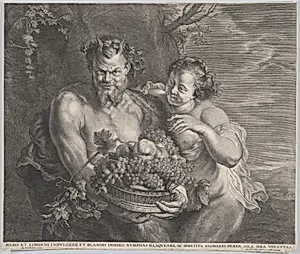
Behold the lively engraving *Satyr and Bacch*, a masterful collaboration between the Baroque genius Peter Paul Rubens and engraver Alexander Voet II created around 1650–95. This dynamic print captures a mythological revelry: a satyr—half-man, half-goat follower of the wine god Bacchus—embraces a bacchante, her flowing drapery and ecstatic pose evoking the wild Dionysian rites of ancient Greece and Rome. Rubens, the Flemish master of movement and sensuality, likely provided the original design, while Voet II's skilled burin translated it into intricate lines on copper plate. Engravings like this were revolutionary in the 17th century, democratizing art by allowing affordable reproductions of Rubens' opulent paintings to reach collectors across Europe. The medium's fine detail—evident in the satyr's textured fur and the bacchante's swirling hair—highlights the Baroque emphasis on drama, emotion, and fleshly vitality. Measuring 15½ × 18⅜ inches, this trimmed sheet from The Metropolitan Museum of Art's Elisha Whittelsey Collection exemplifies how prints preserved Rubens' legacy long after his 1640 death. Step closer to feel the joyous abandon: such scenes celebrated life's pleasures, blending classical mythology with Counter-Reformation exuberance, inviting viewers then and now to revel in art's intoxicating power.
About the Artist
Peter Paul Rubens|Alexander Voet II · 1577–1640
Peter Paul Rubens (1577-1640) stands as the most influential artist of the Flemish Baroque tradition and the greatest exponent of Baroque painting's dynamism, vitality, and sensuous exuberance. Born in Siegen, Westphalia, and raised in Antwerp, Rubens received a humanist education studying Latin and classical literature before pursuing artistic training under three masters: Tobias Verhaecht, Adam ...