
Saucer (soucoupe)
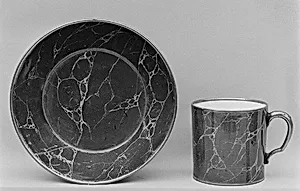
Medium
Soft-paste porcelain
Dimensions
Diameter: 5 in. (12.7 cm)
Classification
Ceramics-Porcelain
Culture
French, Sèvres
Department
European Sculpture and Decorative Arts
Museum
Metropolitan Museum of Art, New York, NY
Credit
Gift of Mrs. George Clinton Gênet, in memory of "Citizen" Edmond Charles Gênet, 1909
Accession Number
09.129.11b
Rights
Public Domain
Art Historical Context
This delicate saucer, crafted by the renowned Sèvres Manuf in 1781, exemplifies the pinnacle of French porcelain artistry during the late Ancien Régime. Measuring just 5 inches in, it was produced using soft-paste porcelain—a European innovation before the widespread adoption of harder Chinese-style formulas. Sèvres, the royal porcelain works near Versailles, was celebrated for its technical mastery, achieving translucent bodies and vibrant colors that rivaled nature's finest gems. In the opulent world of Louis XVI's court, such tableware graced aristocratic banquets, symbolizing refinement and national pride. The manufactory's pieces often featured intricate gilding and painted motifs inspired by neoclassical tastes, blending utility with luxury. This saucer reflects Sèvres' role as a cultural ambassador, exporting French elegance across Europe. A thoughtful gift to the Metropolitan Museum of Art in 1909 by Mrs. George Clinton Gênet, it honors "Citizen" Edmond Charles Gênet, a French diplomat and Revolutionary figure. Today, it invites us to savor the fragile beauty of 18th-century craftsmanship in the European Sculpture and Decorative Arts collection.
About the Artist
Sèvres Manufactory · 1740–present
The Sèvres Manufactory, one of Europe's premier porcelain producers, was established in 1740 as the Manufacture de Vincennes under the patronage of Queen Marie Leszczyńska, who sought to rival Meissen and Chantilly porcelains with French soft-paste innovations. Initially a private venture, it relocated to Sèvres in 1756 in a purpose-built facility designed by architect Laurent Lindet near Madame d...