
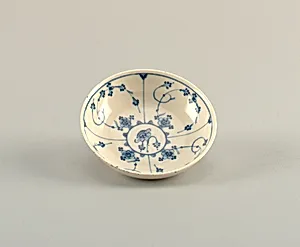
Saucer with "Strohblumen" Pattern
Medium
ceramics
Classification
ceramics
Department
Smithsonian Collection
Museum
Smithsonian American Art Museum
Credit
Bequest of Georgiana L. McClellan
Accession Number
1953-17-15
Rights
Public Domain
About this artwork
Research in Progress
Art Historical Context
This delicate saucer from the Limb Porcelain Manufactory the refined craftsmanship of late 18th-century German. Established in 1762 in Saxony, the manufactory produced high-quality hard-paste porcelain, competing with renowned centers like Meissen. Dating to around 1790, this piece reflects the era's neoclassical elegance, when porcelain factories catered to Europe's growing middle class with elegant tableware for tea and coffee rituals. The "Strohblumen"—translating to "strawflowers"— meticulously hand-painted floral motifs, a popular decorative style evoking the natural beauty of preserved everlastings. These vibrant, stylized blooms showcase the skilled enamel work typical of Limbach, where artists layered colors and gold accents over fired porcelain for durability and luster. Such patterns blended artistic flair with functionality, making luxury accessible. Now part of the Smithsonian American Art Museum's collection through the bequest of Georgiana L. McClellan, this saucer offers a glimpse into everyday opulence. It highlights how porcelain bridged art and domestic life, preserving cultural tastes from the Age of Enlightenment.