
Scale pan
Unknown Artist
1572–84
Medium
Brass
Dimensions
H. 2 1/4 in. (5.7 cm); Diam. 12 7/8 in. (32.7 cm)
Classification
Metalwork-Brass
Culture
Italian, Rome
Department
European Sculpture and Decorative Arts
Museum
Metropolitan Museum of Art, New York, NY
Credit
Rogers Fund, 1963
Accession Number
63.107
Rights
Public Domain
Tags
Art Historical Context
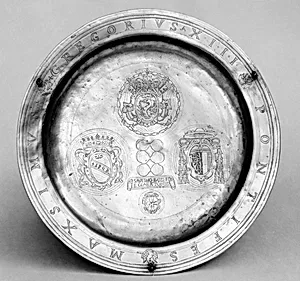
This elegant brass scale pan, crafted in Rome between 1572 and 1584, exemplifies the exquisite metalwork of Renaissance Italy. Measuring just 2¼ inches high and nearly 13 inches in diameter, its shallow, wide form was designed to hold goods for precise weighing on a balance scale—essential for merchants, apothecaries, jewelers in an era when trade flourished across Europe. The inclusion of a coat of arms, as noted in its tags, suggests it to a prominent family, guild, or institution, transforming a functional object into a symbol of status and heritage. Roman artisans of the late 16th century were renowned for their mastery of brass, a durable alloy prized for its golden sheen and resistance to corrosion, making it ideal for instruments requiring accuracy and longevity. Techniques like hammering, chasing, and possibly engraving would have brought fine details to life, blending utility with artistry in the tradition of European decorative arts. Housed in the Metropolitan Museum of Art's European Sculpture and Decorative Arts department, this piece—acquired through the Rogers Fund in 1963—offers a glimpse into the daily precision of Renaissance life, where even tools of commerce reflected cultural sophistication and heraldic pride.