
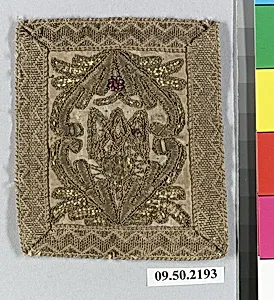
Scapular (?) (one of a pair)
Unknown Artist
18th century
Medium
Silk and metal thread
Dimensions
L. 3 1/4 x W. 3 inches (8.3 x 7.6 cm)
Classification
Textiles-Embroidered
Culture
German
Department
European Sculpture and Decorative Arts
Museum
Metropolitan Museum of Art, New York, NY
Credit
Rogers Fund, 1909
Accession Number
09.50.2193
Rights
Public Domain
Art Historical Context
This delicate 18th-century German scapular, likely one of a pair, exemplifies the exquisite embroidery traditions of Baroque-era Europe. Crafted silk and shimmering metal threads, it measures just 3¼ x 3 inches, suggesting it may have adorned a small devotional statue, doll, or personal relic. The intricate stitching highlights the anonymous artisan's mastery, blending soft silk for texture with metallic accents for a luxurious, jewel-like glow that caught the light in dimly lit chapels or private altars. In 18th-century Germany, such embroidered textiles held deep religious significance within Catholic culture. Scapulars—symbolizing devotion to the Virgin Mary and spiritual protection—were worn or venerated as sacramentals, often commissioned for piety or as votive offerings. The use of costly metal threads underscores their status as high-end decorative arts, bridging fine craftsmanship with faith. Acquired through the Rogers Fund in 1909, this piece now resides in The Metropolitan Museum of Art's European Sculpture and Decorative Arts department. It invites visitors to appreciate the hidden artistry of everyday devotion, revealing how thread could weave stories of spirituality and skill across centuries.