
Scarab
Unknown Artist
ca. 1492–1479 B.C.
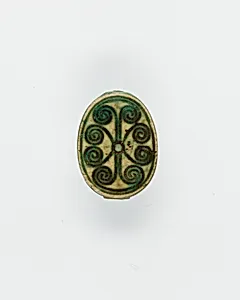
Medium
Glazed steatite
Dimensions
L. 1.4 cm (9/16 in.)
Classification
Scarab
Period
New Kingdom
Department
Egyptian Art
Museum
Metropolitan Museum of Art, New York, NY
Credit
Purchase, Edward S. Harkness Gift, 1926
Accession Number
26.7.701
Rights
Public Domain
Tags
Art Historical Context
This exquisite scarab, dating to around 1492–1479 B.C. during Egypt's New Kingdom Dynasty 18, exemplifies the ancient Egyptians' masterful craftsmanship in miniature form. Carved from glazed steatite—a soft soapstone coated with a vibrant glaze for durability and color—this tiny amulet measures just 1.4 cm long. Scarabs like this one were modeled after the sacred dung beetle, symbolizing rebirth, the sun god Khe, and the cycle of, making them potent talismans worn as jewelry or used as seals for documents and tombs. In the prosperous era of Dynasty 18, under pharaohs like Hatshepsut and Thutmose III, scarabs proliferated as everyday luxury items and royal insignia. The glazing technique, firing steatite with a silica-based frit, produced a shiny, gem-like finish in blues and greens, enhancing their magical and aesthetic appeal. Often inscribed with spells or royal names, they bridged the mundane and divine. Acquired by the Metropolitan Museum of Art in 1926 through the Edward S. Harkness Gift, this scarab invites us to marvel at ancient ingenuity—how such a small object encapsulated profound beliefs in eternity and protection.