
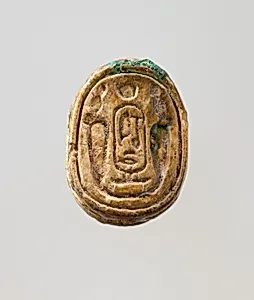
Scarab Inscribed for Ahmose-Nefertari
Unknown Artist
ca. 1550–1525 B.C.
Medium
Steatite
Dimensions
l. 1.3 cm (1/2 in)
Classification
Scarab, Ahmose-Nefertari
Period
New Kingdom
Department
Egyptian Art
Museum
Metropolitan Museum of Art, New York, NY
Credit
Gift of Darius Ogden Mills, 1904
Accession Number
04.2.741
Rights
Public Domain
Tags
Art Historical Context
This petite scarab amulet, carved from steatite—a soft, soapstone-like material ideal for intricate detailing—measures just 1.3 cm long, yet it embodies profound ancient Egyptian symbolism. Fashioned around 1550–1525 B.C. during Dynasty 18 of the New, scarabs mimicked the sacred dung beetle, revered as a manifestation of the sun god Re and a potent emblem of rebirth, transformation, and eternal life. Egyptians wore them as jewelry, seals, or protective talismans, often with hieroglyphs invoking divine favor. Inscribed for Ahmose-Nefertari, the revered queen and consort of Ahmose I—the pharaoh who expelled the Hyksos invaders and reunified Egypt—this scarab marks the dawn of the New Kingdom, Egypt's imperial golden age. Ahmose-Nefertari, later deified as a goddess of the necropolis, symbolized fertility, healing, and royal continuity. The hieroglyphs likely proclaim her name and titles, blending artistry with magical potency to safeguard the wearer in this world and the next. Glazed in the typical blue-green hue of fine scarabs (though not specified here), such objects showcase masterful micro-engraving techniques, revealing Egypt's sophisticated lapidary skills. A gift to the Metropolitan Museum of Art in 1904, this treasure invites us to ponder the intimate spirituality of pharaonic elite life.