
Scarab Inscribed with a Hathor Emblem
Unknown Artist
ca. 1295–1070 B.C.
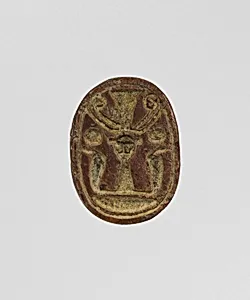
Medium
Steatite (glazed)
Dimensions
L. 1.5 × W. 0.7 × H. 0.5 cm (9/16 × 1/4 × 3/16 in.)
Classification
Scarab, Hathor emblem
Period
New Kingdom, Ramesside
Department
Egyptian Art
Museum
Metropolitan Museum of Art, New York, NY
Credit
The Cesnola Collection, Purchased by subscription, 1874–76
Accession Number
74.51.4406
Rights
Public Domain
Tags
Art Historical Context
This petite scarab, carved from glazed steatite during Egypt's New Kingdom (ca. 1295–1070 B.C.), exemplifies the Ramesside period's masterful miniature artistry from Dynasties 19–20. Measuring just 1.5 cm long, it features an inscription of the Hathor emblem, honoring the beloved goddess of love, music dance, and motherhood. Scarabs like this were not mere ornaments but powerful amulets, shaped like the sacred dung beetle to symbolize rebirth, the sun's daily renewal, and protection in the afterlife. The use of steatite—a soft soapstone—allowed ancient craftsmen to incise fine details before glazing it, often in vibrant blue or green, enhancing its luster and magical potency. Worn as jewelry, used as seals, or placed in tombs, these talismans invoked Hathor's nurturing power against misfortune. Though the artist remains unknown, the scarab's precision reflects the era's sophisticated lapidary techniques amid Egypt's imperial height under pharaohs like Ramesses II. Today, this treasure from The Cesnola Collection graces the Metropolitan Museum of Art, offering a glimpse into daily spiritual life. It reminds us how ancient Egyptians packed profound symbolism into objects small enough to fit in your palm.