
Scarab Ring of Ruiu
Unknown Artist
ca. 1504–1447 B.C.
Medium
Steatite (glazed), silver
Dimensions
Scarab: L. 1.4 cm (9/16 in.); W. 1 cm (3/8 in.); H. 0.6 cm (1/4 in.); Diam. of ring 2.4 cm (15/16 in.)
Classification
Ring, Ruiu, scarab
Period
New Kingdom
Department
Egyptian Art
Museum
Metropolitan Museum of Art, New York, NY
Credit
Rogers Fund, 1935
Accession Number
35.3.52
Rights
Public Domain
Tags
Art Historical Context
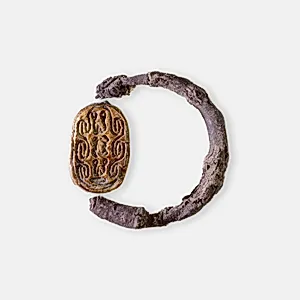
Step into the sunlit world of ancient Egypt with the *Scarab Ring of Ruiu*, a exquisite jewel from the early New Kingdom's 18th Dynasty (ca. 1504–1447 B.C.). Crafted during a golden age of pharaonic power under rulers like Thutmose III, this tiny artifact—featuring a scarab beetle just 1.4 cm long—served as both personal adornment and potent symbol. The name "Ruiu" likely refers to its owner, a common practice for such intimate items, evoking the daily lives of Egypt's elite. Fashioned from steatite, a soft soapstone glazed to a vibrant blue-green sheen mimicking lapis lazuli, the scarab is mounted on a slender silver ring band (2.4 cm diameter). This glazing technique enhanced durability and luster, while the beetle form embodied Khepri, the sun god reborn each dawn—a metaphor for renewal and protection. Scarabs like this doubled as seals or amulets, pressed into clay for official impressions or worn for good fortune, blending artistry with profound spiritual meaning. Today, at the Metropolitan Museum of Art (acquired via Rogers Fund, 1935), this diminutive treasure (Egyptian Art Department) whispers of Egypt's masterful micro-carving skills and enduring fascination with eternity. Imagine Ruiu slipping it on, beetle glinting in the Nile's light—a perfect emblem of life's cyclical wonders.