
Scarab Ring of Ruiu
Unknown Artist
ca. 1504–1447 B.C.
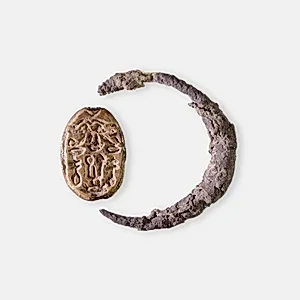
Medium
Steatite (glazed), silver
Dimensions
L. 1.5 cm (9/16 in.); W. 1 cm (3/8 in.); H. 0.5 cm (3/16 in.); Diam. of ring 2.5 cm (1 in.)
Classification
Ring, Ruiu, scarab, hieroglyphs
Period
New Kingdom
Department
Egyptian Art
Museum
Metropolitan Museum of Art, New York, NY
Credit
Rogers Fund, 1935
Accession Number
35.3.54
Rights
Public Domain
Tags
Art Historical Context
Step into the sunlit world of ancient Egypt with the *Scarab Ring of R*, a delicate jewel from the early New Kingdom, around 1504–1447 B.C. Crafted during Dynasty 18—a golden age of pharaohs like Thutmose I and Hatsheps—this tiny artifact measures just 1.5 cm long and is made of glazed steatite (a soapstone) mounted on a silver band. Housed in the Metropolitan Museum of Art's Egyptian Art department, it exemplifies the exquisite miniature artistry of the period. Scarabs like this one were sacred symbols of the sun god Khepri and rebirth, shaped like the dung beetle rolling its ball across the sands—mirroring the sun's daily journey. Inscribed with hieroglyphs likely naming its owner, Ruiu, it served dual purposes: as a signet seal for documents and a protective amulet worn daily. The glazing technique gave the steatite a vibrant, lustrous blue-green sheen, enhancing its magical potency and beauty. This ring offers a personal glimpse into elite Egyptian life, where jewelry blended piety, status, and practicality. Its survival speaks to the enduring craft of New Kingdom goldsmiths and lapidaries, reminding us how such small treasures carried profound cosmic hopes.