
Scarab with Sobek and Wadjet
Unknown Artist
ca. 1295–1070 B.C.
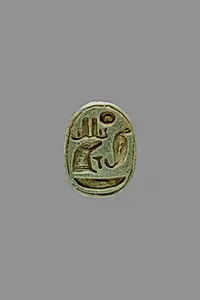
Medium
Green glazed faience
Dimensions
L. 1.6 × W. 1.3 × H. 0.9 cm (5/8 × 1/2 × 3/8 in.)
Classification
Scarab, crocodile, cobra, Wadjet, sun disk, heb, papyrus, crown, Sobek
Period
New Kingdom
Department
Egyptian Art
Museum
Metropolitan Museum of Art, New York, NY
Credit
Rogers Fund, 1909
Accession Number
09.180.1008
Rights
Public Domain
Art Historical Context
This exquisite green glazed faience scarab, dating to Egypt's New Kingdom (ca. 1295–1070 B.C., Dynasties 19–20), measures just 1.6 cm long, embodying the ancient Egyptians' mastery of miniature artistry. Crafted as a scarab beetle—a sacred symbol of rebirth and the sun god Khepri—the piece features Sobek, the powerful crocodile god of the Nile associated with fertility and protection, alongside Wadjet, the cobra goddess and guardian of Lower Egypt. Such amulets were worn as jewelry, used as seals, or placed in tombs to invoke divine safeguarding. Faience, a fine ceramic material coated in vibrant turquoise-green glaze, mimicked precious stones like lapis lazuli, making these talismans accessible yet luxurious. The glazing technique involved firing quartz-based paste with copper oxide for color, creating a glossy, enduring surface that evoked renewal and the Nile's life-giving waters. During the Ramesside period, at the empire's zenith under pharaohs like Ramesses II, scarabs proliferated as personal protective charms. Today, this Rogers Fund acquisition at the Metropolitan Museum of Art offers a window into everyday ancient Egyptian spirituality, where deities like Sobek and Wadjet bridged the human and divine, ensuring prosperity amid the Nile's rhythms. A tiny marvel reminding us of eternity in the palm of your hand!