
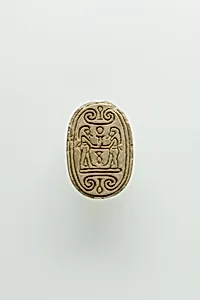
Scarab with the Representation of Fecundity Figures (Hapy)
Unknown Artist
ca. 1802–1640 B.C.
Medium
Steatite
Dimensions
L. 2 × W. 1.4 × H. 0.9 cm (13/16 in. × 9/16 in. × 3/8 in.)
Classification
Scarab with two fecundity figures, hieroglyphs, nefer, ankh, Hapi, Nile God
Period
Middle Kingdom
Department
Egyptian Art
Museum
Metropolitan Museum of Art, New York, NY
Credit
Rogers Fund, 1915
Accession Number
15.3.62
Rights
Public Domain
Art Historical Context
Behold this exquisite scarab amulet from Egypt's Middle Kingdom, crafted around 1802–1640 B.C. during Dynasty 13. Carved from steatite—a soft, soapstone-like material ideal for intricate detailing—this tiny treasure measures just 2 cm long, small enough to wear as jewelry or use as a seal. At the Metropolitan Museum of Art, thanks to the Rogers Fund of 1915, it the masterful lapidary work of anonymous ancient artisans who transformed humble stone into potent symbols. The scarab's surface features representations of fecundity figures embodying Hapy, the Nile god of fertility and the river's life-giving inundations. These plump, nurturing deities with overflowing breasts symbolized abundance, renewal, and the annual floods that fertilized Egypt's lands. Scarabs themselves evoked rebirth, mimicking the dung beetle rolling its ball like the sun god Re across the sky, making this piece a powerful talisman for protection, prosperity, and the cycle of life. In the Middle Kingdom, a time of artistic revival and political flux, such amulets were everyday guardians, bridging the mortal world and divine forces. Holding it, you touch the heartbeat of ancient Egyptian spirituality, where even the smallest object carried cosmic weight.