
(Scene from Don Quixote)
Medium
Painting
Classification
Painting
Department
Smithsonian Collection
Museum
Smithsonian American Art Museum
Credit
Smithsonian American Art Museum, Gift of Mrs. George Viault
Accession Number
1970.186
Rights
Public Domain
Tags
About this artwork
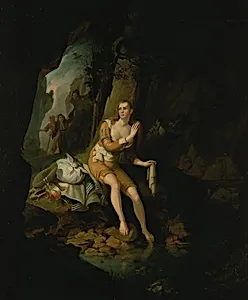
This painting shows a scene from the seventeenth-century novel Don Quixote by Miguel de Cervantes. Inspired by stories of chivalry, Don Quixote traveled “through the world in search of adventures.” He met a young girl who had run away from home disguised in boy’s clothing. Here, she has just been discovered by three of Quixote’s companions, who stare in confusion, aroused by “his” beautiful long legs that appear to be made of “pure alabaster.”
Art Historical Context
John Ritto Penniman’s 1816 painting captures a lively moment from Miguel de Cervantes’s beloved seventeenth-century novel *Don Quixote*. The scene shows three of the knight’s companions discovering a young girl who has fled her home disguised as a boy. Their surprised expressions highlight the humor and confusion that arise when her long, alabaster-like legs give away her true identity. Set against a wooded landscape with a glimpse of water, the composition draws viewers into this playful encounter. Penniman, an American artist working in the early nineteenth century, chose to illustrate a popular European literary classic at a time when such stories resonated with audiences seeking adventure and moral lessons. The work reflects the era’s fascination with Cervantes’s tale of chivalry and illusion, adapting its wit for a new audience across the Atlantic. Gifted to the Smithsonian American Art Museum by Mrs. George Viault, the painting invites modern viewers to appreciate how timeless themes of identity and perception continue to spark curiosity.