
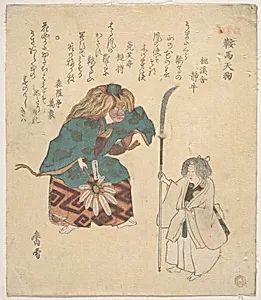
Scene from Noh Dance
ca. 1820
Medium
Woodblock print (surimono); ink and color on paper
Dimensions
8 3/16 x 7 1/16 in. (20.8 x 17.9 cm)
Classification
Prints
Culture & Period
Japan · Edo period (1615–1868)
Department
Asian Art
Museum
Metropolitan Museum of Art, New York, NY
Credit
Gift of T. Ito, Chicago, Ill, 1919
Accession Number
JP1152
Rights
Public Domain
Tags
Art Historical Context
This exquisite woodblock print, *Scene from Noh Dance* by Kosetsu, captures a dramatic moment from Japan's revered Noh theater around 1820, during the vibrant Edo period (1615–1868). Measuring just 8 3/16 x 7 1/16 inches, this intimate *surimono*—a deluxe, privately commissioned print often produced for poetic gatherings or New Year's celebrations—showcases women wielding weapons, evoking the stylized grace and intensity of Noh performances. Noh, a masked dance-drama dating back to the 14th century, blends music, dance, and chant to explore themes of the supernatural, history, and human emotion, making this scene a window into classical Japanese performing arts. Kosetsu's masterful use of ink and color on paper highlights the *surimono* technique: multiple woodblocks carved for precise layering of vibrant hues, subtle gradations (*bokashi*), and possibly luxurious effects like embossing or mica. Unlike mass-produced ukiyo-e, *surimono* were artisanal treasures for elite patrons, often featuring calligraphy. Here, the focus on armed women underscores Noh's portrayal of fierce female spirits or warriors, blending elegance with power—a nod to Edo Japan's fascination with theater and the floating world. Now at the Metropolitan Museum of Art (gift of T. Ito, 1919), this print invites visitors to appreciate how everyday woodblock printing elevated cultural storytelling, preserving Noh's timeless allure in vivid, portable form.