
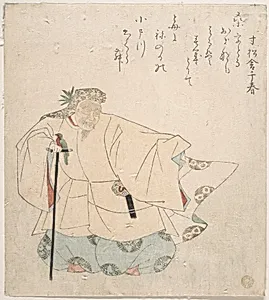
Scene from Noh Dance
ca. 1820
Medium
Woodblock print (surimono); ink and color on paper
Dimensions
7 3/4 x 6 7/8 in. (19.7 x 17.5 cm)
Classification
Prints
Culture & Period
Japan · Edo period (1615–1868)
Department
Asian Art
Museum
Metropolitan Museum of Art, New York, NY
Credit
Gift of T. Ito, Chicago, Ill, 1919
Accession Number
JP1154
Rights
Public Domain
Tags
Art Historical Context
This enchanting woodblock print, *Scene from Noh Dance*, created by Totoya Hokkei 1820, captures graceful poise of a from Japan's revered Noh theater tradition.kei, a skilled ukiyo-e artist pupil of the famed Katsushika Hokusai, specialized in surimono—luxurious, privately commissioned prints often produced for New Year's greetings or poetry gatherings. Measuring just 7 3/4 x 6 7/8 inches, intimate scale invites close contemplation, revealing intricate details of the dancer's flowing robes and dynamic pose amid swirling patterns. Produced during Japan's Edo period (1615–1868), a golden age of urban culture and woodblock printing, this surimono exemplifies the era's technical mastery. Artisans layered vibrant inks and colors on fine paper, sometimes incorporating mica or embossing for a shimmering, tactile effect suited to elite patrons. Noh dance, with its masked actors and ritualistic movements symbolizing spiritual themes, held profound cultural importance, blending Zen philosophy, mythology, and performance art. Hokkei's work not only preserves a fleeting moment of artistry but also highlights surimono's role in democratizing high culture through exquisite craftsmanship. On view in the Metropolitan Museum of Art's Asian Art department, it offers visitors a window into Edo Japan's elegant fusion of theater and printmaking.
About the Artist
Totoya Hokkei · 1780–1850
Totoya Hokkei (魚屋 北渓, 1780–1850), born Iwakubo Tatsuyuki in Edo (modern Tokyo), began his life as a humble fishmonger in the Yotsuya Samegahashi district, a trade reflected in his art name "Totoya," meaning fish shop. He transitioned to art through rigorous training, first studying under Kanō Yōsen'in Korenobu, head of the Kobikichō branch of the prestigious Kanō school, where he honed landscape p...