
Scenes from the life of Joan of Arc
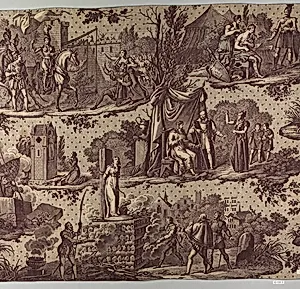
Medium
Cotton
Dimensions
L. 22 1/4 x W. 32 1/2 inches 56.5 x 82.6 cm
Classification
Textiles-Printed
Culture
French, Munster
Department
European Sculpture and Decorative Arts
Museum
Metropolitan Museum of Art, New York, NY
Credit
Rogers Fund, 1913
Accession Number
13.133.3
Rights
Public Domain
Tags
Art Historical Context
This vibrant printed cotton panel, *Scenes from the Life of of Arc* (1817), was produced by the renowned French textile firm Hartmann et Fils in collaboration with designer Charles Abraham Chassel. Measuring 22¼ x 32½ inches, it captures dramatic moments from the life of the 15th-century French heroinedepicting her with horses, soldiers, women, and trees in a narrative tableau. Housed in the Metropolitan Museum of Art's European Sculpture and Decorative Arts department, this piece exemplifies early 19th-century printed textiles from the Mulhouse region (near Munster), where innovative factories revolutionized home furnishings. Created during France's Bourbon Restoration, shortly after Napoleon's defeat, the artwork taps into Joan's enduring role as a symbol of national resilience and Catholic fervor. Revived as a patriotic icon amid post-Revolutionary identity struggles, these scenes likely portray her victories, trials, and martyrdom, inspiring domestic pride in middle-class homes. The medium's significance lies in copperplate printing techniques, which allowed intricate, multi-color designs on cotton at affordable prices—democratizing fine art motifs once reserved for tapestries. As a "Textiles-Printed" classification, it highlights the Industrial Revolution's impact on decorative arts, blending historical storytelling with everyday utility. A testament to French craftsmanship, it invites visitors to envision Joan gracing 19th-century parlors.
About the Artist
Hartmann et Fils|Charles Abraham Chasselat
**Hartmann et Fils** was a prominent French textile manufactory based in Munster, Alsace, renowned for its high-quality printed cotton fabrics (indiennes) that blended industrial innovation with artistic design. Founded in 1818 by André Hartmann (1746–1837) together with his sons Frédéric and Henry, the firm built upon André’s earlier ventures in the region, which dated back to the late 18th centu...