
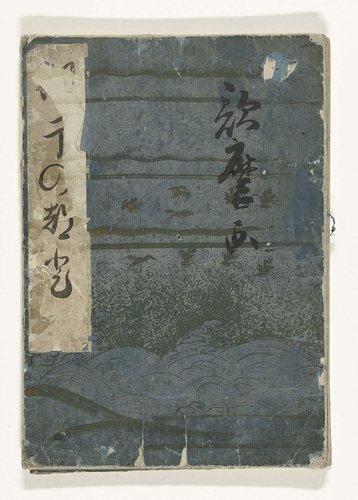
Schelpenboek
1789 - 1795
Medium
nishikie, with blindprinting and mica, folding album
Dimensions
271; 190
Rights
Public Domain
About this artwork
verzamelaarsmerk, eerste pagina, rechtsboven, gestempeld: Lugt 1172c
Art Historical Context
**Schelpenboek (Shell Book)** *Kitagawa Utamaro, 1789–1795* *Nishikie woodblock with blindprinting and mica folding album, 271 × 190 mm* Step into the shimmering world of Edo-period Japan with Kitagawa Utam's *Schelpenboek*, a exquisite folding album from the late 1780s to mid-1790s. Utamaro, a master of ukiyo-e ("pictures of the floating world"), is celebrated for his graceful depictions of women and nature, blending sensuality with meticulous observation. This rare work showcases his talent for natural history illustration, transforming humble seashells into objects of poetic beauty. Produced during Utamaro's creative peak, it reflects the era's fascination with the ephemeral—shells evoking the sea's treasures and seasonal impermanence in Japanese culture. The album's nishikie technique, or "brocade printing," employs vibrant, multi-color woodblocks for jewel-like hues, enhanced by blindprinting (karazuri embossing) for subtle texture and mica dust for a luminous, iridescent glow mimicking shell nacre. At 271 × 190 mm, its intimate format invited private contemplation, a hallmark of luxury artists' books. A collector's mark (Lugt 1172c) stamped on the first page, top right, hints at its esteemed European provenance, bridging Japanese artistry with global appreciation. This gem highlights advanced printing innovations that elevated ukiyo-e to high art, influencing Impressionists like Monet. Visitors, imagine flipping its pages to discover nature's hidden elegance!
About the Artist
Kitagawa Utamaro · 1753–1806
Kitagawa Utamaro (c. 1753-1806) was one of the most celebrated masters of ukiyo-e woodblock printing, revolutionizing the art of bijin-ga (pictures of beautiful women) during Japan's Edo period. Born Kitagawa Ichitaro, his early life remains shrouded in mystery, with conflicting accounts placing his birth in Kyoto, Osaka, Yoshiwara in Edo (modern Tokyo), or Kawagoe in Musashi Province. Under the t...