
Scroll
ca. 1800
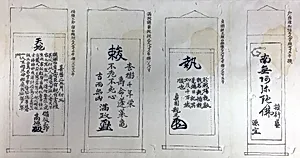
Medium
Ink on paper
Dimensions
L. 37 ft. 4 in. (11.4 m); W. 11 in. (27.9 cm)
Classification
Miscellaneous
Culture
Japanese
Department
Arms and Armor
Museum
Metropolitan Museum of Art, New York, NY
Credit
Rogers Fund, 1917
Accession Number
17.235.6
Rights
Public Domain
Art Historical Context
This extraordinary Japanese scroll, created anonymously around 1800, unfolds over an impressive 37 feet and 4 inches in length, with a narrow 11-inch width—perfectly suited for the traditional handscroll format known as *emakimono*. Crafted in ink on paper, a medium central to East Asian art, it reflects the precision and fluidity of Japanese calligraphy and brushwork during the late Edo period (1603–1868). Such scrolls were often unrolled in sections for intimate viewing, allowing narratives or detailed records to emerge gradually. Housed in the Metropolitan Museum of Art's Arms and Armor department and acquired through the Rogers Fund in 1917, this "Miscellaneous" classification piece likely documents or illustrates martial subjects, shedding light on Japan's samurai culture, weaponry, or armor traditions at a time when peace prevailed under the Tokugawa shogunate. Its presence here underscores how art intertwined with military life, preserving technical knowledge and aesthetic sensibilities. Visitors will appreciate the scroll's delicate ink techniques, where bold lines and subtle washes capture intricate details on fragile paper. A testament to anonymous craftsmanship, it invites us to ponder the unseen hands that chronicled Japan's warrior heritage.
About the Artist
Anonymous
In the vast tapestry of art history, "Anonymous" stands not as a singular individual but as a collective designation for countless unidentified creators whose works have endured across millennia. These artists, spanning prehistoric cave painters to medieval illuminators and folk craftsmen, produced the foundational layers of human visual culture. Prior to the Renaissance, when individual fame emer...