
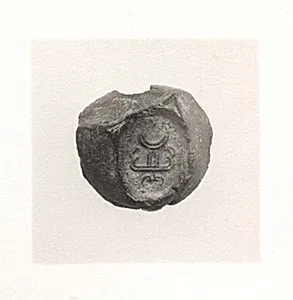
Sealing
Unknown Artist
ca. 7th century CE
Medium
Un-baked clay
Dimensions
0.43 in. (1.09 cm)
Classification
Clay-Sealings
Culture & Period
Sasanian · Sasanian
Department
Ancient Near Eastern Art
Museum
Metropolitan Museum of Art, New York, NY
Credit
Rogers Fund, 1936
Accession Number
36.30.269
Rights
Public Domain
Art Historical Context
Step into the world of Sasanian Persia with this delicate *Sealing*, a tiny un-baked clay impression from the 7th century. Measuring just 0.43 inches (1.09 cm), it belongs to the Metropolitan Museum of Art's Ancient Near Eastern Art collection, acquired through the Rogers Fund in 193. Crafted by an unknown artist the Sasanian period (224–651 CE), this artifact exemplifies everyday administrative tools from one of antiquity's most sophisticated empires. Sasanian sealings like this one were pressed from cylinder seals onto soft, un-baked clay to secure documents, containers, or parcels, ensuring authenticity and preventing tampering. The un-fired medium—fragile yet practical—highlights the period's advanced bureaucracy, where seals often featured royal motifs, deities, or mythical beasts symbolizing power and divine kingship. As the Sasanian Empire bridged ancient Mesopotamia and medieval Islam, these objects reveal a culture blending Zoroastrian faith, imperial grandeur, and meticulous record-keeping. Though small, this sealing offers a window into daily life under rulers like Khosrow II, underscoring the Sasanians' enduring artistic legacy in glyptic art. Its preservation speaks to the era's intricate social order, making it a treasure for understanding pre-Islamic Persia.