
Seated Buddha
Unknown Artist
ca. 7th–8th century
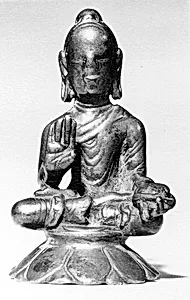
Medium
Bronze
Dimensions
H. 3 1/4 in. (8.3 cm)
Classification
Sculpture
Culture
Pakistan
Department
Asian Art
Museum
Metropolitan Museum of Art, New York, NY
Credit
Samuel Eilenberg Collection, Gift of Samuel Eilenberg, 1987
Accession Number
1987.142.342
Rights
Public Domain
Tags
Art Historical Context
This exquisite Seated Buddha, crafted in bronze around the 7th–8th century in Pakistan's Swat Valley, stands just 3¼ inches tall, inviting close contemplation. From the ancient Gandhara region—a cultural crossroads of Indian, Persian, and Hellenistic influences—this small sculpture exemplifies the region's mastery of Buddhist devotional art. Swat Valley, a thriving hub of early Mahayana Buddhism, produced countless such icons for personal meditation or temple worship, reflecting the faith's spread along Silk Road trade routes. The figure's serene, meditative pose in the lotus position, with hands in earth-touching mudra (symbolizing Buddha's triumph over temptation), captures the idealized realism characteristic of Gandhara style. Artisans employed the lost-wax casting technique, common in bronze works of the era, to achieve fine details like the draped robes and gentle smile—hallmarks blending classical Greek anatomy with spiritual symbolism. Though the artist remains unknown, this piece highlights the anonymous yet skilled workshops that fueled Buddhism's artistic golden age. Today, housed in the Metropolitan Museum of Art's Asian Art Department as part of the Samuel Eilenberg Collection, it offers a tangible link to a vibrant era when portable bronzes like this carried profound teachings across Asia. A testament to enduring faith and craftsmanship. (198 words)