
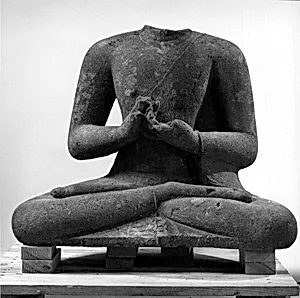
Seated Preaching Buddha
Unknown Artist
9th century
Medium
Andesite
Dimensions
H. 28 1/8 in. (71.4 cm); W. 34 1/8 in. (86.7 cm)
Classification
Sculpture
Culture & Period
Indonesia (Java) · Central Javanese period
Department
Asian Art
Museum
Metropolitan Museum of Art, New York, NY
Credit
Rogers Fund, 1982
Accession Number
1982.220.4
Rights
Public Domain
Tags
Art Historical Context
This majestic *Seated Preaching Buddha carved in the 9th century during Java's Central Javanese, exemplifies the pinnacle of Indonesian Buddhist sculpture. Crafted from andesite—a durable volcanic stone quarried locally—the statue measures 28⅛ inches high and 34⅛ inches wide, capturing the Buddha in a serene seated posture with hands likely forming the teaching mudra (varada or vitarka), symbolizing the dissemination ofharma. Acquired through the Rogers Fund in 1982, it now graces the Asian Art department at the Metropolitan Museum of Art. Originating from the Sailendra dynasty's era (8th–10th centuries), when Mahayana Buddhism flourished on Java alongside monumental temple complexes like Borobudur, this unknown artist's work reflects a golden age of spiritual artistry. The smooth, polished surfaces and idealized proportions highlight the period's mastery of stone carving, where sculptors achieved lifelike drapery and tranquil expressions through precise chiseling and abrasion techniques. Culturally, the sculpture underscores Buddhism's profound influence in ancient Java, serving as a meditative focal point in temples or shrines. Its preaching pose invites contemplation of enlightenment, bridging the divine and the devotee in a timeless dialogue of wisdom and compassion.