
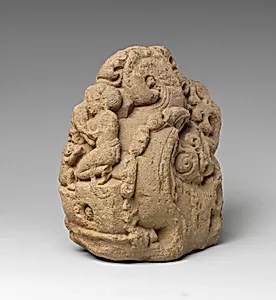
Water Spout in the Form of a Makara
Unknown Artist
ca. 10th century
Medium
Andesite
Dimensions
H. 14 in. (35.5 cm); W. 13 7/16 in. (34.2 cm); D. 8 in. (20.3 cm); Wt. 57 lbs. (25.9 kg)
Classification
Sculpture
Culture & Period
Indonesia (Java) · Central or Eastern Javanese period
Department
Asian Art
Museum
Metropolitan Museum of Art, New York, NY
Credit
Gift of Cynthia Hazen Polsky, 1983
Accession Number
1983.511.1
Rights
Public Domain
Tags
Art Historical Context
This striking andesite water spout, carved in the form of a makara around the 10th century, hails from Java, Indonesia, during the Central or Eastern Javanese period. Measuring 14 inches high and weighing a substantial 57 pounds, it once adorned a Hindu temple, channeling rainwater from rooftops through the creature's gaping mouth—a practical yet symbolic feature in ancient architecture. The makara, a fantastical hybrid beast blending elephant, crocodile, and fish elements, embodies the mythical guardian of waters in Hindu cosmology, often linked to the sacred Ganges River. Crafted from durable volcanic andesite, a favored medium for Javanese sculptors due to its fine grain and weather resistance, this piece showcases the era's masterful stone carving techniques. Intricate details in the makara's curling trunk, fierce jaws, and ornate motifs reflect the artistic prowess of anonymous artisans serving powerful Hindu-Buddhist kingdoms, such as those behind grand temples like Prambanan. Today, this gift to the Metropolitan Museum of Art from Cynthia Hazen Polsky in 1983 invites visitors to ponder Java's rich fusion of functionality, mythology, and devotion, bridging the divine and everyday in 10th-century life.