
Seated Woman
Medium
Wool, metal thread (20-25 warps per inch, 8-10 per cm.)
Dimensions
43 × 46 in. (109.2 × 116.8 cm)
Classification
Textiles-Tapestries
Culture
Russian, St. Petersburg
Department
European Sculpture and Decorative Arts
Museum
Metropolitan Museum of Art, New York, NY
Credit
Gift of Julia A. Berwind, 1953
Accession Number
53.225.15
Rights
Public Domain
Tags
Art Historical Context
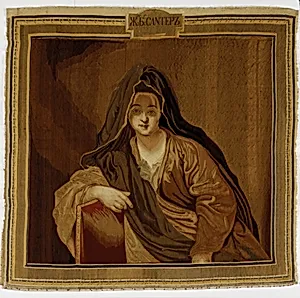
Nestled in the opulent world of late 18th-century Russian court life, *Seated Woman* is exquisite tapestry produced by the Imperial Russian Tap Manufactory in Saint. Attributed to designs by the French Rococo painter Jean-Baptiste San (1651–1717), this work captures the elegance of a poised female portrait, blending Western European influences with Russian craftsmanship. Dating to the late 1700s, it reflects Empress Catherine the Great's drive to elevate Russian arts through state-sponsored manufactories modeled after France's Gobelins. Woven from wool and shimmering metal threads with a fine density of 20-25 warps per inch (8-10 per cm), the tapestry showcases masterful technique. This high thread count allowed for intricate details in the woman's posture, drapery, and expression, mimicking painting's realism while highlighting the medium's tactile luxury. Measuring 43 × 46 inches, it was likely intended as a wall hanging for aristocratic interiors, symbolizing wealth and refinement. Today, housed in the Metropolitan Museum of Art's European Sculpture and Decorative Arts department (gift of Julia A. Berwind, 1953), *Seated Woman* underscores Russia's cultural ambitions during the Enlightenment. It bridges portraiture traditions—evident in its tags for women and portraits—with the enduring prestige of tapestries as status symbols, inviting visitors to appreciate the fusion of artistry and imperial patronage.