
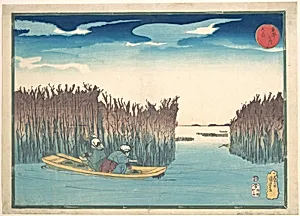
Seaweed Gatherers at Omori
1797–1861
Medium
Woodblock print; ink and color on paper
Dimensions
10 3/4 x 14 7/8 in. (27.3 x 37.8 cm)
Classification
Prints
Culture & Period
Japan · Edo period (1615–1868)
Department
Asian Art
Museum
Metropolitan Museum of Art, New York, NY
Credit
Henry L. Phillips Collection, Bequest of Henry L. Phillips, 1939
Accession Number
JP2857
Rights
Public Domain
Tags
Art Historical Context
Utagawa Kuniyoshi *Seaweed Gatherers at Omori* (c. 19th century) captures a serene snapshot of everyday life along Japan's coastline during the Edo period (1615–1868). This woodblock print depicts figures harvesting seaweed at Omori, a coastal area near Edo (modern-day Tokyo), with boats bobbing in the water and lush plants framing the scene. Kuniyoshi, a master of the ukiyo-e ("pictures of the floating world") tradition, skillfully blends human activity with nature, highlighting the labor-intensive lives of ordinary people who sustained coastal communities through such seasonal work. As a color woodblock print on paper (10 3/4 x 14 7/8 in.), the artwork exemplifies the collaborative Japanese printmaking process: artists designed, carvers sculpted blocks, and printers applied vibrant inks in precise layers. This medium democratized art, making affordable, mass-produced images accessible to all classes, from merchants to samurai. Kuniyoshi's dynamic compositions and expressive figures, often infused with subtle humor or drama, elevated mundane subjects into poetic narratives. Housed in the Metropolitan Museum of Art's Asian Art Department (Henry L. Phillips Collection, 1939), this print reflects Edo Japan's fascination with transient beauty and the harmony between humans and environment—a cultural ethos rooted in seasonal rhythms and Shinto reverence for nature. Visitors will appreciate its vivid colors and intimate storytelling, a window into pre-industrial Japan.
About the Artist
Utagawa Kuniyoshi · 1797–1861
Utagawa Kuniyoshi (1797–1861) was born in Edo to the silk-dyer Yanagiya Kichiyemon, originally bearing the childhood name Yoshisaburō. From a young age, he assisted in his family's pattern design work, which sharpened his innate mastery of color and textile motifs that would permeate his later prints. At around twelve years old, his prodigious drawing skills drew the attention of the renowned Utag...