
Seio-bo, from the series "One Hundred No Dramas (Nogaku hyakuban)"
1898/1903
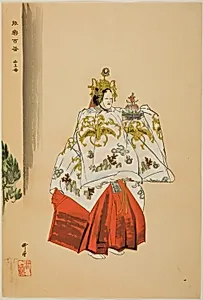
Medium
Color woodblock print
Dimensions
Approx: 37.8 × 25.6 cm (14 7/8 × 10 1/8 in.)
Classification
woodblock print
Department
Arts of Asia
Museum
Art Institute of Chicago
Accession Number
154624
Rights
Public Domain
Art Historical Context
**Seio-bo, from series "One Hundred Noamas (Nogaku hyuban)"** Tsukioka Kôgyo (1869–1927), a master of Japanese woodblock printing in the ukiyo-e tradition, this striking color woodblock print around 1898–1903. Part of his ambitious series *Nogaku hyakuban*, which visually documents one hundred classic Noh dramas, *Seio-bo* captures pivotal scene from the play featuring the character Seio-bo, a warrior monk. Measuring about 37.8 × 25.6 cm, this intimate format was ideal for collectors and theater enthusiasts during Japan's Meiji era (1868–1912), a time of rapid modernization when traditional arts like Noh faced cultural shifts. Noh theater, a refined 14th-century performance art blending dance, music, and masked drama, held deep spiritual and aesthetic significance in Japanese culture. Kôgyo's series preserved these elusive performances through vivid prints, making them accessible beyond live stages. His meticulous technique—layering vibrant colors via multiple carved woodblocks—conveys the ethereal grace of Noh costumes, dynamic poses, and atmospheric backdrops, evoking the play's supernatural tension. Housed in the Art Institute of Chicago's Arts of Asia department, this print exemplifies how woodblock art bridged Japan's artistic past and present, offering visitors a window into Noh's timeless mystique.
About the Artist
Tsukioka Kôgyo · 1869–1927
Tsukioka Kōgyo (1869–1927), born Hanyū Bennosuke in Tokyo's bustling Nihonbashi district as the second son of an innkeeper family, navigated a path from humble origins to mastery in Japanese printmaking. After his father's early death, he was raised by his mother's Sakamaki family and apprenticed in pottery painting under his uncle, a ceramics exporter in Yokohama. He briefly attended the Tokyo Sc...