
Sennin
Unknown Artist
1870
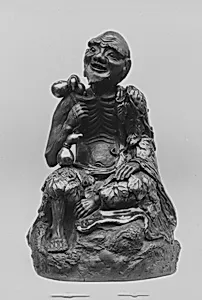
Medium
Pottery, partly unglazed; the costume in reddish brown glaze (Takatori ware)
Dimensions
H. 13 1/4 in. (33.7 cm)
Classification
Ceramics
Culture & Period
Japan · Meiji period (1868–1912)
Department
Asian Art
Museum
Metropolitan Museum of Art, New York, NY
Credit
Gift of Mrs. V. Everit Macy, 1923
Accession Number
23.225.374
Rights
Public Domain
Tags
Art Historical Context
Behold the enigmatic *Sennin*, a pottery figure from Japan's Meiji period (18681912), crafted around 1870 in Takatori ware. Standing at13¼ inches tall, this male immortal—known as a *sennin* in folklore—embodies the revered mountain ascetics who achieved transcendence spiritual discipline and harmony with nature. Gifted to the Metropolitan Museum Art in 1923 by Mrs. V. Everit Macy, it resides in the Asian Department, showcasing the era's blend of tradition amid rapid modernization. Takatori ware, originating from Fukuoka Prefecture, is celebrated for its rustic vitality. Here, the potter masterfully left much of the sculpture unglazed to highlight the clay's natural texture, while applying a rich reddish-brown glaze to the flowing costume, creating dramatic contrast and depth. This technique not only accentuates the figure's dynamic form but also evokes the earthy essence of Zen and Daoist ideals. During the Meiji era, as Japan opened to the West, artisans like this unknown creator preserved ceramic traditions that symbolized cultural resilience. The *Sennin* invites visitors to ponder timeless themes of enlightenment and impermanence, a porcelain sage whispering ancient wisdom in a modern world.