
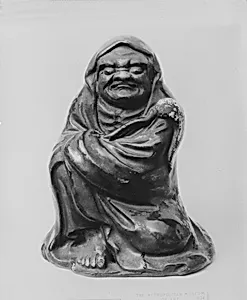
Seated Figure of Daruma
Unknown Artist
1800
Medium
Faience with feet and face unglazed, the rest covered with enamel (Kyoto ware)
Dimensions
H. 7 1/4 in. (18.4 cm)
Classification
Ceramics
Culture & Period
Japan · Edo period (1615–1868)
Department
Asian Art
Museum
Metropolitan Museum of Art, New York, NY
Credit
Gift of Mrs. V. Everit Macy, 1923
Accession Number
23.225.263
Rights
Public Domain
Tags
Art Historical Context
This delightful *Seated Figure of Dar*, created around 1800 during Japan's Edo period (16151868), captures the meditative essence of the legendary Zen monk Bodhidharma in a compact ceramic form. Standing just 7¼ inches (18.4 cm) tall, it hails Kyoto ware, a renowned tradition of faience—tin-glazed earthenware prized for its vibrant enamels and fine craftsmanship. Produced in the bustling cultural hub of Kyoto, such pieces reflect the era's prosperity and artistic innovation, when ceramics flourished alongside ukiyo-e prints and kabuki theater. Artistically, the figure's unglazed feet and face provide a raw, tactile contrast to the enameled body, evoking the monk's ascetic life and adding a sense of realism and intimacy. This selective glazing technique highlights the Kyoto potters' mastery of overglaze enamels, allowing bold colors and intricate details to shine. Daruma figures like this were popular talismans, symbolizing perseverance and good fortune in everyday Japanese homes. Now in the Metropolitan Museum of Art's Asian Art Department, thanks to a 1923 gift from Mrs. V. Everit Macy, this unknown artist's work invites visitors to ponder Zen's enduring influence on Japanese culture. A perfect blend of spirituality and artistry!