
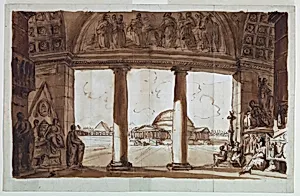
Sepulchral Chapel seen through a Colonnade
18th century
Medium
architecture
Classification
architecture
Department
Smithsonian Collection
Museum
Smithsonian American Art Museum
Credit
Museum purchase through gift of various donors and from Eleanor G. Hewitt Fund
Accession Number
1938-88-163
Rights
Public Domain
About this artwork
Research in Progress
Art Historical Context
Giuseppe Barberi (1746–1809), a prominent Italian architect of the late 18th century, captures the grandeur of sacred space in *Sepulchral Chapel through a Colonnade This architectural rendering, created during the Enlightenment era, showcases Barberi's mastery of perspective and classical forms, evoking the neoclassical revival that swept Europe. Through an elegant colonnade, the viewer glimpses the solemn interior of a funerary chapel, blending light and shadow to emphasize depth and reverence. As a work in the medium of architecture—likely a precise drawing or design study—Barberi's piece highlights the era's fascination with antiquity. Architects like him drew inspiration from Roman ruins, using colonnades to frame views and create dramatic vistas. This technique not only demonstrates technical skill but also invites contemplation of mortality and eternity, core themes in sepulchral art. Acquired through museum purchase with gifts from various donors and the Eleanor G. Hewitt Fund, this 18th-century gem resides in the Smithsonian American Art Museum's collection. Though research continues, it offers a window into Italy's architectural legacy, reminding us how drawings preserved grand visions for posterity.