
Sestertius (Coin) Portraying Emperor Maximinus
235-236
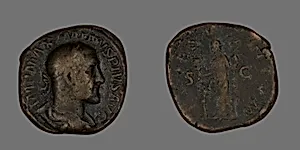
Medium
Bronze
Dimensions
Diam.: 3.2 cm (1 5/16 in.)
Classification
coin
Department
Arts of Greece, Rome, and Byzantium
Museum
Art Institute of Chicago
Accession Number
141795
Rights
Public Domain
Art Historical Context
This bronze sestertius, minted in 235-236 CE during the brief reign of Emperor Maximin Thrax, offers a glimpse into the turbulent "Crisis of the Third Century" in the Roman Empire. Maximinus, a Thracian soldier who rose through the ranks to become emperor, was the first "barracks emperor," acclaimed by amid civil strife. Measuring just 3.2 cm in diameter this coin exemplifies Roman imperial portraiture, likely featuring Maximinus' stern visage on the obverse to assert his authority and divine favor across the empire. As a large-denomination bronze coin, the sestertius was widely circulated for commerce and propaganda, blending artistry with utility. Roman mints employed skilled engravers to create detailed, high-relief designs—often with military motifs or deities on the reverse—struck from dies for mass production. This technique ensured the emperor's image reached even remote provinces, reinforcing loyalty and imperial power. Housed in the Art Institute of Chicago's Arts of Greece, Rome, and Byzantium department, this artifact highlights how everyday money served as a canvas for Roman cultural identity, blending metallurgy, iconography, and politics in a portable form of ancient artistry.
About the Artist
Ancient Roman
The artists attributed to "Ancient Roman" in museum collections represent the anonymous craftsmen who produced the vast output of sculpture, frescoes, mosaics, and reliefs defining Roman visual culture from the Republic (c. 509–27 BCE) to the late Empire (c. 395 CE). Individual identities remain elusive, as Roman makers were typically viewed as skilled tradesmen—often enslaved Greeks or provincial...