
Set of Sword Fittings (Mitokoromono)
Unknown Artist
ca. 1615–1868
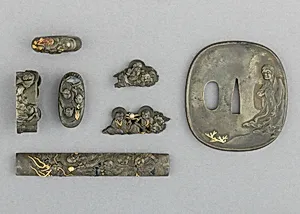
Medium
Copper-silver alloy (shibuichi), gold, copper-gold alloy (shakudō), copper
Dimensions
29.100.1357a: L. 1 1/2 in. (3.8 cm); W. 7/8 in. (2.2 cm) 29.100.1357b: L. 1 3/8 in. (3.5 cm); W. 5/8 in. (1.6 cm) 29.100.1357c: L. 1 1/4 in. (3.2 cm); W. 1/2 in. (1.3 cm); 29.100.1357d: L. 1 3/4 in. (4.4 cm); W. 5/8 in. (1.6 cm); 29.100.1357e: L. 1 1/8 in. (2.9 cm); W. 5/8 in. (1.6 cm)
Classification
Sword Furniture-Fittings, Sets of
Culture
Japanese
Department
Arms and Armor
Museum
Metropolitan Museum of Art, New York, NY
Credit
H. O. Havemeyer Collection, Bequest of Mrs. H. O. Havemeyer, 1929
Accession Number
29.100.1357a–e
Rights
Public Domain
Tags
Art Historical Context
This exquisite set of *Mitokoromono* sword fittings, crafted in Japan during the Edo period (ca. 1615–1868), represents pinnacle of samurai artistry. *Mitokoromono* refers to a traditional trio of fittings—typically including *menuki* (hilt ornaments), *kgai* (a utility skewer), and *kozuka* (a small knife handle)—designed to adorn katana swords. Here, the set comprises five precisely scaled pieces, each no larger than 1¾ inches, featuring intricate depictions of human figures that evoke the dynamic world of warriors and courtiers. Masterfully fashioned from shibuichi (a copper-silver alloy with a subtle patina), shakudō (copper-gold alloy prized for its dark luster), gold, and copper, these fittings showcase virtuoso metalworking techniques. Artisans employed damascening, inlaying, and chiseling to create textured surfaces and lifelike figures, transforming functional objects into wearable sculptures. Such opulent materials not only prevented corrosion but also signaled the owner's status in a society where swords were both weapons and symbols of honor. Part of the renowned H. O. Havemeyer Collection at The Metropolitan Museum of Art, this set highlights Japan's enduring fusion of utility and beauty in arms and armor. During the peaceful Edo era, sword fittings became canvases for artistic expression, reflecting cultural values of refinement amid martial tradition.