
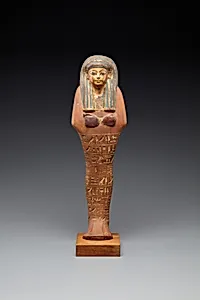
Shabti of Yuya
Unknown Artist
ca. 1390–1352 B.C.
Medium
Cedar, gold, paint
Dimensions
H. 26.5 × W. 8 × D. 5 cm (10 7/16 × 3 1/8 × 1 15/16 in.)
Classification
Shabti, Yuya
Period
New Kingdom
Department
Egyptian Art
Museum
Metropolitan Museum of Art, New York, NY
Credit
Theodore M. Davis Collection, Bequest of Theodore M. Davis, 1915
Accession Number
30.8.56
Rights
Public Domain
Tags
Art Historical Context
This elegant shabti figure, carved from fragrant cedar wood during Egypt’s New Kingdom, belonged to Yuya, a high-ranking official and father-in-law of Pharaoh Amenhotep III. Created around 1390–1352 B.C., it was placed in his tomb to serve as a magical servant in the afterlife. The figure’s serene expression and carefully modeled form reflect the refined funerary art of Dynasty 18, when such statuettes became essential companions for the deceased. Crafted with remarkable skill, the shabti is adorned with gold leaf and painted details that highlight its status. Delicate hieroglyphs inscribed across its surface likely include spells from the Book of the Dead, instructing the figure to answer when called upon to perform agricultural labor for its owner. The combination of precious materials and practical purpose underscores the ancient Egyptians’ belief in preparing thoroughly for eternity. Today housed in the Metropolitan Museum of Art, this modest yet refined object offers visitors a tangible connection to Yuya’s world and the sophisticated spiritual traditions of the New Kingdom.