
Shabti of Yuya
Unknown Artist
ca. 1390–1352 B.C.
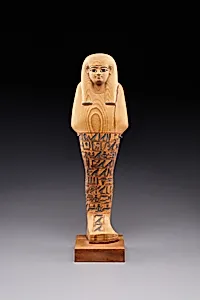
Medium
Cedar, ink
Dimensions
H. 23.5 × W. 7.2 × D. 4.9 cm (9 1/4 × 2 13/16 × 1 15/16 in.)
Classification
Shabti, Yuya
Period
New Kingdom
Department
Egyptian Art
Museum
Metropolitan Museum of Art, New York, NY
Credit
Theodore M. Davis Collection, Bequest of Theodore M. Davis, 1915
Accession Number
30.8.58
Rights
Public Domain
Tags
Art Historical Context
This elegant shabti figure, carved from fragrant cedar wood and inscribed with hieroglyph in ink, was created to serve its owner in the afterlife. Dating to Egypt’s New Kingdom, Dynasty 18, such funerary figurines were placed in tombs to perform any labor the deceased might be called upon to complete in the underworld. Standing just over nine inches tall, the compact form reflects the practical yet reverent craftsmanship typical of the period. The shabti belonged to Yuya, a powerful court official and father-in-law of the great pharaoh Amenhotep III. Its presence in the tomb underscores the elite status of its owner and the belief that even the wealthiest Egyptians required magical assistance to navigate eternity. The choice of cedar—an imported, durable wood—further signals both prestige and the desire for permanence. Today housed in the Metropolitan Museum of Art, this small yet potent object offers visitors a direct connection to ancient Egyptian hopes for life beyond death. Its hieroglyphic inscriptions, though worn by time, still whisper the spells that once animated the figure for its eternal duties.