
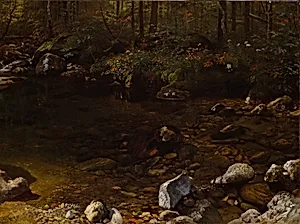
Shady Pool, White Mountains, New Hampshire
Classification
Painting
Department
Smithsonian Collection
Museum
Smithsonian American Art Museum
Credit
Hirshhorn Museum and Sculpture Garden, Smithsonian Institution, Washington, DC, Gift of Joseph H. Hirshhorn, 1966
Accession Number
66.506
Rights
Public Domain
About this artwork
Robert S. Sloan Gallery, New York, to 1964
Art Historical Context
Albert Bierstadt's "Shady Pool, White, New Hampshire" captures the serene beauty of the American around 1869. Born in Germany and raised in the United States, Bierstadt became one of the leading figures of the Hudson River School, a movement that celebrated the grandeur and untouched wilderness of American landscapes. This painting reflects the post-Civil War era's growing fascination with the nation's natural wonders, as artists sought to document and romanticize scenic regions like the White Mountains, which drew tourists and painters alike. As a landscape painting, the work highlights Bierstadt's skill in evoking atmosphere and light within a wooded setting. The title suggests a quiet, shaded pool nestled among the mountains, inviting viewers to appreciate the peaceful details of the forest floor and surrounding terrain. Such scenes helped shape public appreciation for preserving America's scenic heritage during a time of rapid industrialization. Now part of the Smithsonian American Art Museum collection through a generous gift, this piece offers visitors a glimpse into 19th-century artistic responses to the American environment. Bierstadt's focus on New Hampshire's mountains complements his more famous Western vistas, underscoring his lifelong dedication to portraying the country's diverse natural beauty.