
Sheep, from a set of 16 plates
1664
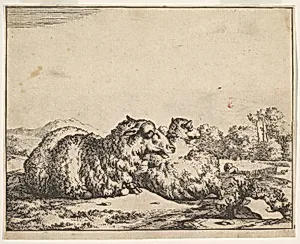
Medium
Etching
Dimensions
sheet: 4 7/16 x 5 1/2 in. (11.2 x 14 cm)
Classification
Prints
Department
Drawings and Prints
Museum
Metropolitan Museum of Art, New York, NY
Credit
Bequest of Phyllis Massar, 2011
Accession Number
2012.136.668.4
Rights
Public Domain
Tags
Art Historical Context
In the heart of the Dutch Golden Age, Marcus de Bye's *Sheep, from a set of 16 plates* (1664) captures the quiet dignity of pastoral life through the delicate art of etching. This intimate print, measuring just 4 7/ x 5 1/2 inches, showcases de Bye's skill in rendering animal subjects with remarkable precision. As part of a larger series likely devoted to livestock, it reflects the era's fascination with the natural world, where detailed studies of farm animals served both artistic and practical purposes—educating viewers on breeds vital to the thriving Dutch economy. Etching, de Bye's chosen medium, allowed for intricate line work that brings the sheep's woolly texture and gentle stance to life. By coating a metal plate with acid-resistant ground, drawing through it, and immersing in acid, artists like de Bye achieved fluid, expressive lines impossible with woodcuts. This technique democratized fine art, making high-quality images affordable beyond elite circles. Housed in the Metropolitan Museum of Art's Drawings and Prints department through the generous bequest of Phyllis Massar in 2011, this modest yet masterful plate invites us to appreciate the everyday beauty elevated by 17th-century ingenuity. A testament to de Bye's enduring appeal, it reminds visitors of art's power to immortalize the humble.