
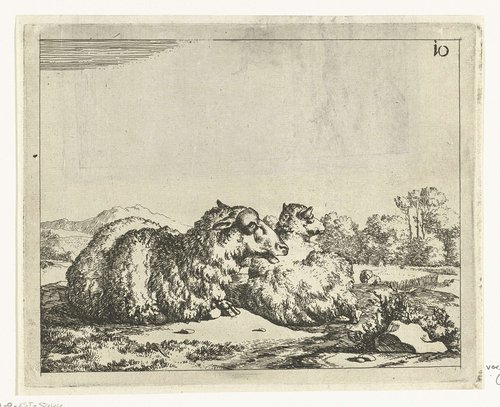
10/16
1660
Medium
etching
Dimensions
116; 146
Rights
Public Domain
About this artwork
ets
Art Historical Context
**10/16 by Marcus de Bye (1660)** Created in 1660, *10/16* is an etching by Marcus de Bye, a Dutch printmaker active during the Golden Age of Dutch art. This small-scale work, measuring just 116 mm high by 146 mm wide, exemplifies the intimate format favored for etchings, which were affordable and widely circulated reproductions or original designs. The title suggests it belongs to a numbered series of 16 prints, a common practice among 17th-century engravers to showcase thematic collections, from landscapes to vignettes, allowing collectors to build cohesive sets. Etching, de Bye's chosen medium, involved drawing into a wax ground on a copper plate with acid biting the lines to create rich, tonal effects— a technique that revolutionized printmaking in the Netherlands. By 1660, amid economic prosperity and a booming art market, such works democratized high art, bridging fine painting and everyday appreciation. De Bye's precise linework reflects the era's mastery of detail, influenced by masters like Rembrandt, though his output often featured pastoral or architectural scenes. Step closer to this delicate gem in our virtual gallery: *10/16* captures the ingenuity of 17th-century innovation, inviting you to ponder its place in a larger narrative of artistic experimentation and cultural exchange. (198 words)